---
title: "#85 - Why MSP Partnerships Fail (And How to Save Them)"
description: Discover why MSP partnerships often fail, the core structural issues responsible, and essential strategies to save or restructure them for sustainable growth.
image: https://beringmckinley.com/hubfs/%2385%20-%20Why%20MSP%20Partnerships%20Fail%20And%20How%20to%20Save%20Them%20%20BMK%20Vision%20Roundtable.png
---
[Skip to the main content.](https://beringmckinley.com/blog/85-why-msp-partnerships-fail-and-how-to-save-them-bmk-vision-roundtable#main-content)
[%20logo.png?width=588&height=164&name=BMK%20(just%20text)%20logo.png "Bering McKinley Logo")](https://beringmckinley.com)
[%20logo.png?width=1212&height=224&name=BMK%20(just%20text)%20logo.png "BMK (just text) logo")](https://beringmckinley.com)
- [What We Do](https://beringmckinley.com/vision)
- [BMK Vision](https://beringmckinley.com/vision)
- [BPA](https://beringmckinley.com/business-performance-assessment)
- [Master Project Plan](https://beringmckinley.com/master-project-plan)
- [Management Consulting](https://beringmckinley.com/management-consulting)
- [Sales Consulting](https://beringmckinley.com/sale-consulting)
- [Application Consulting](https://beringmckinley.com/application-consulting)
- [Finance Consulting](https://beringmckinley.com/finance-consulting)
- [Who We Work With](https://beringmckinley.com/who-we-work-with)
- [MSP / ITSP (1M or Less Revenue)](https://beringmckinley.com/msps-less-than-1m-revenue)
- [MSP / ITSP (1-3M Revenue)](https://beringmckinley.com/msps-1-to-3m-evenue)
- [MSP / ITSP (3-15M+ Revenue)](https://beringmckinley.com/msps-3-to-15m-plus-revenue)
- [Internal IT Departments](https://beringmckinley.com/it-department)
- [Brands We Work With](https://beringmckinley.com/brands-we-work-with)
- [ConnectWise](https://beringmckinley.com/brands-we-work-with)
- [Intuit / QuickBooks](https://beringmckinley.com/brands-we-work-with)
- [MSP Bots](https://beringmckinley.com/brands-we-work-with)
- [IT Glue](https://beringmckinley.com/brands-we-work-with)
- [Datto](https://beringmckinley.com/brands-we-work-with)
- [Lionguard](https://beringmckinley.com/brands-we-work-with)
- [SkyKick](https://beringmckinley.com/brands-we-work-with)
- [Lifecycle Insights](https://beringmckinley.com/brands-we-work-with)
- [Phin](https://beringmckinley.com/brands-we-work-with)
- [Alternative Payments](https://beringmckinley.com/brands-we-work-with)
- [Vendor? Work with us.](https://beringmckinley.com/brands-we-work-with)
- [About](https://beringmckinley.com/about)
- [Team](https://beringmckinley.com/team)
- [Careers](https://beringmckinley.com/careers)
- Other BMK Brands
- [BMK Community](https://bmkcommunity.com)
- [BMK Education](https://bmkcommunity.com/education-and-training/)
- [BMK Operations](https://www.bmkcommunity.com/msp-operations/)
- [Blog](https://beringmckinley.com/blog)
- [Contact](https://beringmckinley.com/contact)
- [Text us](SMS:212.300.3016)
Search
[](https://beringmckinley.com/hs/cta/wi/redirect?encryptedPayload=AVxigLJFWk2%2BrV1H8xekuXMsHsr5A%2FWbc7wCI1ZoLdZCsd0dksXWTDegIBuIMZ0RNt9yTSIpuIgjlc9JcBmJuy%2BTbBDbgIUeHlfyfIgXul%2FIEjwAfsbC4E5B3FKz9tSlFqy%2BVQWw41tGVFOtDHqLeHD0w8xNjCBgPzGxcZbWjxsFXfcm3GKRD8AaqvIEnDL5z55t&webInteractiveContentId=195731585557&portalId=2725629)
Toggle Menu
Search
Toggle Menu
[](https://beringmckinley.com/hs/cta/wi/redirect?encryptedPayload=AVxigLJFWk2%2BrV1H8xekuXMsHsr5A%2FWbc7wCI1ZoLdZCsd0dksXWTDegIBuIMZ0RNt9yTSIpuIgjlc9JcBmJuy%2BTbBDbgIUeHlfyfIgXul%2FIEjwAfsbC4E5B3FKz9tSlFqy%2BVQWw41tGVFOtDHqLeHD0w8xNjCBgPzGxcZbWjxsFXfcm3GKRD8AaqvIEnDL5z55t&webInteractiveContentId=195731585557&portalId=2725629)
- [What We Do](https://beringmckinley.com/vision)
- [BMK Vision](https://beringmckinley.com/vision)
- [BPA](https://beringmckinley.com/business-performance-assessment)
- [Master Project Plan](https://beringmckinley.com/master-project-plan)
- [Management Consulting](https://beringmckinley.com/management-consulting)
- [Sales Consulting](https://beringmckinley.com/sale-consulting)
- [Application Consulting](https://beringmckinley.com/application-consulting)
- [Finance Consulting](https://beringmckinley.com/finance-consulting)
- [Who We Work With](https://beringmckinley.com/who-we-work-with)
- [MSP / ITSP (1M or Less Revenue)](https://beringmckinley.com/msps-less-than-1m-revenue)
- [MSP / ITSP (1-3M Revenue)](https://beringmckinley.com/msps-1-to-3m-evenue)
- [MSP / ITSP (3-15M+ Revenue)](https://beringmckinley.com/msps-3-to-15m-plus-revenue)
- [Internal IT Departments](https://beringmckinley.com/it-department)
- [Brands We Work With](https://beringmckinley.com/brands-we-work-with)
- [ConnectWise](https://beringmckinley.com/brands-we-work-with)
- [Intuit / QuickBooks](https://beringmckinley.com/brands-we-work-with)
- [MSP Bots](https://beringmckinley.com/brands-we-work-with)
- [IT Glue](https://beringmckinley.com/brands-we-work-with)
- [Datto](https://beringmckinley.com/brands-we-work-with)
- [Lionguard](https://beringmckinley.com/brands-we-work-with)
- [SkyKick](https://beringmckinley.com/brands-we-work-with)
- [Lifecycle Insights](https://beringmckinley.com/brands-we-work-with)
- [Phin](https://beringmckinley.com/brands-we-work-with)
- [Alternative Payments](https://beringmckinley.com/brands-we-work-with)
- [Vendor? Work with us.](https://beringmckinley.com/brands-we-work-with)
- [About](https://beringmckinley.com/about)
- [Team](https://beringmckinley.com/team)
- [Careers](https://beringmckinley.com/careers)
- Other BMK Brands
- [BMK Community](https://bmkcommunity.com)
- [BMK Education](https://bmkcommunity.com/education-and-training/)
- [BMK Operations](https://www.bmkcommunity.com/msp-operations/)
- [Blog](https://beringmckinley.com/blog)
- [Contact](https://beringmckinley.com/contact)
- [Text us](SMS:212.300.3016)
- Example Link
- Example Link
- Example Link
[Facebook](https://beringmckinley.com/blog/85-why-msp-partnerships-fail-and-how-to-save-them-bmk-vision-roundtable#0) [Instagram](https://beringmckinley.com/blog/85-why-msp-partnerships-fail-and-how-to-save-them-bmk-vision-roundtable#0) [Linkedin](https://beringmckinley.com/blog/85-why-msp-partnerships-fail-and-how-to-save-them-bmk-vision-roundtable#0) [X](https://beringmckinley.com/blog/85-why-msp-partnerships-fail-and-how-to-save-them-bmk-vision-roundtable#0) [YouTube](https://beringmckinley.com/blog/85-why-msp-partnerships-fail-and-how-to-save-them-bmk-vision-roundtable#0) [Medium](https://beringmckinley.com/blog/85-why-msp-partnerships-fail-and-how-to-save-them-bmk-vision-roundtable#0)
6 min read
# #85 - Why MSP Partnerships Fail (And How to Save Them)
[ Josh Peterson](https://beringmckinley.com/blog/author/josh-peterson) : Published February 23, 2026 Updated February 24, 2026
[BMK Vision Roundtable](https://beringmckinley.com/blog/tag/bmk-vision-roundtable)

Most MSP partnerships don't fail in a single moment. They fail slowly — through years of avoided conversations, boilerplate operating agreements, and the quiet assumption that shared history is the same thing as shared vision. By the time a third party gets involved, the damage is rarely the presenting issue. It's almost always something deeper: undefined roles, misaligned expectations, and equity structures that were never designed to withstand growth. At [Bering McKinley](https://beringmckinley.com/vision), we see this pattern more than almost any other — and it's why the [client engagement work we do](https://beringmckinley.com/blog/client-engagement-strategy-for-managed-service-providers-from-onboarding-to-qbrs) so often begins not with growth strategy, but with partnership triage.
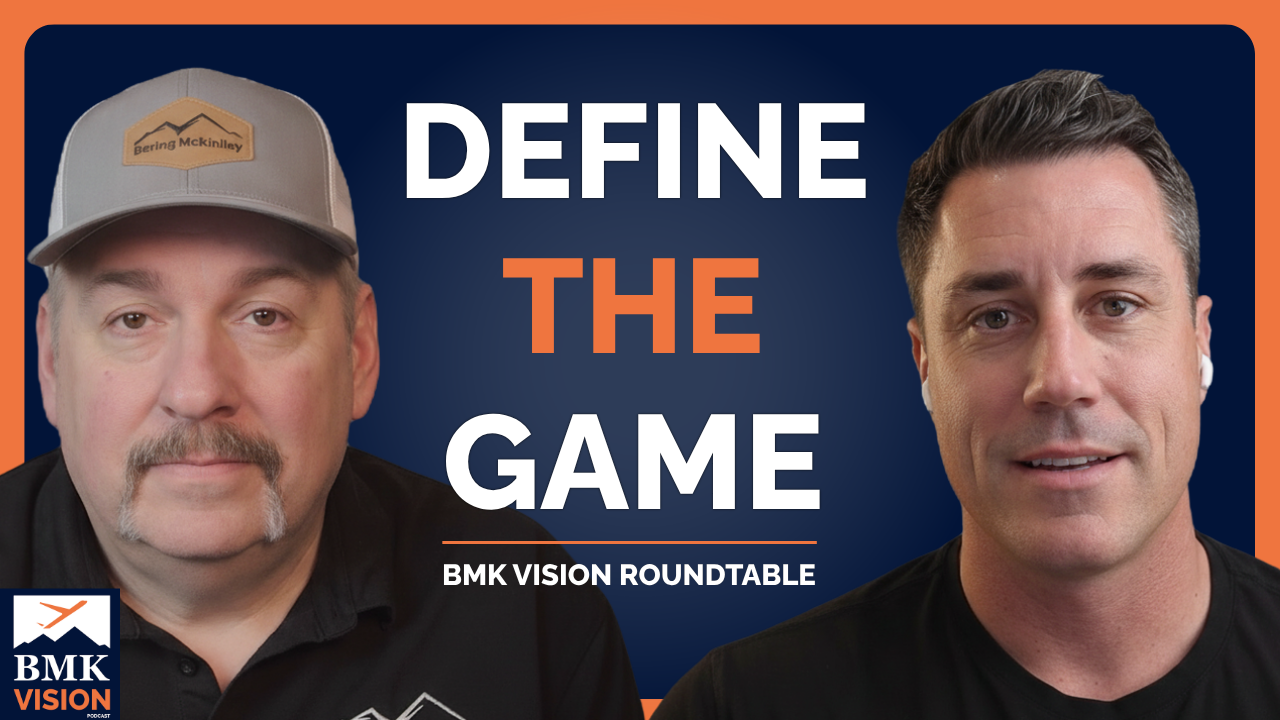
In this BMK Vision Roundtable, Josh Peterson and Gary Boyle pull from live client situations to examine what actually breaks MSP partnerships — and what owners can do to get ahead of it before the cost becomes irreversible. This is not a conversation about conflict resolution tactics. It's a frank examination of the structural decisions most MSP partners never make, and the leadership clarity that separates businesses that scale from ones that stall. If you're in a partnership — or thinking about entering one — this episode will surface blind spots you didn't know you had.
---
## Listen on Your Favorite Platform
- [](https://podcasts.apple.com/us/podcast/the-bmk-vision-podcast/id1827082235)
- [](https://www.youtube.com/@beringmckinleyvision?sub_confirmation=1)
- [](https://music.youtube.com/playlist?list=PL03jvZSuXCDFHzZFwDdTs1xP07b8AI_5P)
- [](https://open.spotify.com/show/6iYx2sDBy2YnN3V2YA9GyW)
- [](https://music.amazon.com/podcasts/33fb1a31-0a2b-4478-80b9-38fc3c552675/the-bmk-vision-podcast)
- [](https://www.podbean.com/pw/pbblog-k23bf-14140db?from=usersite)
- [](https://www.iheart.com/podcast/269-the-bmk-vision-podcast-259005021/)
- [](https://player.fm/series/the-bmk-vision-podcast)
- [](https://www.listennotes.com/podcasts/the-bmk-vision-podcast-josh-peterson-7iS7AIHHUhL/)
- [](https://www.podchaser.com/podcasts/the-bmk-vision-podcast-5871877)
- [](https://www.boomplaymusic.com/podcasts/136263)
---
## Why MSP Partnerships Fail Before They Begin
The origin story of most MSP partnerships contains the seeds of their eventual failure. Two technicians leave the same employer. They bond over shared frustration, shared clients, and the mutual belief that they could run things better. What they rarely bond over is a clear answer to the question that actually matters: what does each of us do that the other cannot? When the answer is "roughly the same thing," the partnership has a structural problem from day one — one that early momentum will mask but never fix. The first few years of client acquisition feel like proof of concept. They are not. They are borrowed time.
- Shared professional history is not a substitute for complementary roles
- Early revenue growth masks accountability gaps that compound over time
- The absence of role clarity is a leadership decision, even when it feels like an oversight
## The Word of Mouth Trap
There is a belief that runs through the MSP industry with remarkable consistency: that building a business on referrals is a competitive advantage. It is not. It is the default condition of every small business in its first decade — and treating it as a superpower is one of the clearest signals that a leadership team hasn't yet asked harder questions about how they intend to grow. Referral networks have a ceiling tied almost entirely to the personal network of the founders, and it reveals itself around the one-million-dollar revenue mark, typically after five to seven years. The business hasn't stalled because the market changed. It's stalled because the partnership was never designed to grow beyond what two people could generate through relationships alone.
- Referral growth is finite and founder-dependent by nature
- The million-dollar ceiling is predictable — and almost always a surprise to the partners inside it
- Proactive sales and marketing aren't a growth option at this stage — they're a structural requirement
## The 50/50 Problem
Equal equity splits feel fair at the start. In practice, they create a leadership vacuum that becomes harder to resolve the longer it goes unaddressed. When no partner holds a decisive stake, every significant decision requires consensus — and consensus under pressure tends to produce delay, resentment, or both. The more telling problem is what happens when one partner isn't performing. In a 50/50 structure, there is no default authority to act. The operating agreement is usually boilerplate that neither partner fully understands. Buy-sell provisions, if present, are vague. Role expectations were never tied to equity. The result is a business where the stakes are high and the accountability structure is essentially informal.
- 60/40 splits create a default decision-maker — 50/50 creates a permanent negotiation
- Most operating agreements are designed to satisfy a legal requirement, not resolve a real dispute
- A great buy-sell agreement ties role expectations to equity and specifies what happens when those expectations aren't met
## The Presenting Issue Is Never the Real Issue
MSP owners rarely engage a consultant because their partnership is broken. They engage because utilization is low, sales are flat, or they can't figure out why the business has plateaued. The partnership fracture reveals itself later — usually within the first few sessions, when a third party starts asking which owner is accountable for which outcomes and the room goes quiet. This is where a structured operating system does something that conversation alone cannot: it creates a neutral framework for surfacing what the partners already know but haven't said out loud. Who owns growth? Who owns service delivery? Who is actually performing at the level this business needs? These aren't comfortable questions. They're necessary ones — and the longer they go unasked, the more expensive the answer becomes.
- Tactical problems are almost always symptoms of structural partnership failures
- A third party can surface what two partners have been avoiding for years
- The Vision Operating System creates accountability structure that makes the real issues visible and addressable
## When to Fight for the Partnership — and When to Dissolve It
Not every broken partnership should be dissolved. Some should be restructured. The distinction matters — and it requires honest assessment of whether both partners are capable of performing at the level the business needs, not just willing. Willingness without capability is a trap that costs the stronger partner years. The more productive question is whether a restructured equity arrangement — one where a non-performing partner retains ownership but exits operations — is viable. It can be. But it requires the remaining partner to accept a profit-share obligation they'd rather not carry, and the exiting partner to accept a role reduction that feels like a verdict on their performance. Neither conversation is comfortable. Both are better than the alternative of doing nothing.
- Third-party facilitation is the difference between a recoverable partnership and an expensive dissolution
- A partner who can't perform in operations can still hold equity — but the structure must be intentional, not inherited
- Dissolution, when inevitable, is far less damaging when the operating agreement anticipated it
## Frequently Asked Questions
### Why do most MSP partnerships start with misaligned roles?
Because most partnerships form around shared history and mutual trust, not complementary skills. Role clarity requires a harder conversation than most partners are willing to have before the stakes feel real.
### What is the most common reason MSP partnerships fail?
Undefined roles and the absence of a structured operating agreement that ties equity to performance expectations. Most failures are structural, not personal.
### Is a 50/50 equity split ever a good idea for an MSP?
It can work in the early years, but it creates a leadership vacuum as the business grows. A majority stake — even a small one — designates a default decision-maker and reduces the risk of stalemate under pressure.
### What should a buy-sell agreement include for an MSP partnership?
At minimum: defined role expectations for each partner, a process for evaluating whether those expectations are being met, a valuation methodology, and a clear process for buyout if one partner wants to exit or is asked to leave.
### Can a partner stay on as an equity holder without working in the business?
Yes, but it requires intentional restructuring — typically a higher compensation plan for the remaining operating partner and annual dividends rather than salary for the passive partner. It works best when both parties agree before resentment sets in.
### When should MSP partners bring in a third party?
Before the breaking point. If equity, role, or accountability questions are surfacing more than occasionally, that's the signal. Waiting until dissolution is imminent dramatically increases the cost — financially and operationally.
## Episode Highlights
- **00:00** — Why partnership breakdowns are accelerating — and what's driving the pattern right now
- **02:41** — How naiveness on day zero sets the conditions for failure years later
- **09:05** — The mutual validation trap: when partners confirm each other's wrong assumptions
- **21:34** — Why the presenting issue is never the real issue — and how the Vision system reveals what partners avoid
- **24:26** — The word of mouth belief that every MSP holds — and why it quietly caps growth
- **28:51** — The non-negotiable question every partnership must answer: who owns sales, who owns service
- **33:01** — What a great buy-sell agreement actually looks like versus what most partnerships have
- **39:21** — When partnership resentment mirrors a failing marriage — and what that means for intervention timing
- **43:16** — The passive equity model: can a partner stay on as an owner without working in the business
- **51:15** — Practical takeaways for MSP owners in partnerships right now
## About the Co-Host: Gary Boyle
Gary Boyle is a Partner for Strategy & Business Development at Bering McKinley. With a background spanning network engineering, entrepreneurship, and strategic consulting, Gary brings real-world operator experience to helping MSP owners build stronger, more profitable businesses. He has navigated partnership structures firsthand and brings that perspective directly to every conversation about MSP business design and leadership.
[Connect with Gary Boyle on LinkedIn →](https://www.linkedin.com/in/garyboyle/)
## About the Host: Josh Peterson
Josh Peterson is the CEO of Bering McKinley and host of The BMK Vision Podcast. Since 2004, Josh has worked with hundreds of MSP owners to build operationally sound, profitable businesses through consulting, peer teams, and direct coaching.
[Connect with Josh Peterson on LinkedIn →](https://www.linkedin.com/in/joshdpeterson/)
## Related Resources from Bering McKinley
- [The BMK Vision Operating System](https://beringmckinley.com/vision)
- [Client engagement strategy for managed service providers](https://beringmckinley.com/blog/client-engagement-strategy-for-managed-service-providers-from-onboarding-to-qbrs)
## Want to Continue the Conversation?
If this episode surfaced uncomfortable questions about your partnership structure, that's the point. The earlier you confront the gaps, the less it costs to fix them — and the Vision Operating System gives you the framework to have those conversations with clarity instead of conflict.
[Apply to be a Guest](https://beringmckinley.com/blog#speaker-form) [Learn More About Vision](https://beringmckinley.com/vision)
- [Tweet](https://twitter.com/share)
[](https://beringmckinley.com/blog/no-quota-no-sales-role-the-msp-sales-system-reset)
#### [No Quota, No Sales Role: The MSP Sales System Reset](https://beringmckinley.com/blog/no-quota-no-sales-role-the-msp-sales-system-reset)
[ Gary Boyle](https://beringmckinley.com/blog/author/gary-boyle) : Mar 23, 2026, 6:00:00 AM
Discover how MSP owners can reset their sales systems by defining clear goals, implementing accountability, and structuring compensation for success.
[BMK Vision Roundtable](https://beringmckinley.com/blog/tag/bmk-vision-roundtable)
[Read More](https://beringmckinley.com/blog/no-quota-no-sales-role-the-msp-sales-system-reset)
[](https://beringmckinley.com/blog/82-ownership-doesnt-equal-seat-fit-bmk-roundtable)
#### [#82 – Ownership Doesn’t Equal Seat Fit | BMK Roundtable](https://beringmckinley.com/blog/82-ownership-doesnt-equal-seat-fit-bmk-roundtable)
[ Josh Peterson](https://beringmckinley.com/blog/author/josh-peterson) : Feb 7, 2026, 5:51:55 PM
Clear ownership roles in MSPs are crucial for growth. Define outcomes, establish accountability, and maintain a structured cadence to avoid...
[BMK Vision Roundtable](https://beringmckinley.com/blog/tag/bmk-vision-roundtable)
[Read More](https://beringmckinley.com/blog/82-ownership-doesnt-equal-seat-fit-bmk-roundtable)
[.png)](https://beringmckinley.com/blog/84-we-dont-track-time-why-msps-stall-at-2m-bmk-vision-roundtable)
#### [#84 – “We Don’t Track Time” – Why MSPs Stall at $2M | BMK Vision Roundtable](https://beringmckinley.com/blog/84-we-dont-track-time-why-msps-stall-at-2m-bmk-vision-roundtable)
[ Josh Peterson](https://beringmckinley.com/blog/author/josh-peterson) : Feb 16, 2026, 12:00:00 AM
Discover why MSPs often stall at $2M revenue and how disciplined time tracking can transform feelings into strategic growth decisions. Learn why time...
[From the Trenches](https://beringmckinley.com/blog/tag/from-the-trenches) [BMK Vision Roundtable](https://beringmckinley.com/blog/tag/bmk-vision-roundtable)
[Read More](https://beringmckinley.com/blog/84-we-dont-track-time-why-msps-stall-at-2m-bmk-vision-roundtable)
Menu
Menu
- [What We Do](https://beringmckinley.com/vision)
- [Who We Work With](https://beringmckinley.com/who-we-work-with)
- [Brands We Work With](https://beringmckinley.com/brands-we-work-with)
- [About](https://beringmckinley.com/about)
- Blog
- [Contact](https://beringmckinley.com/contact)
More from BMK
More from BMK
[BMK Education](https://education.beringmckinley.com/)
[BMK Community](https://bmkcommunity.com/)
[BMK Ops](https://bmkoperations.com/)
Bering McKinley
Bering McKinley
650 Warrenville Road
Suite 100 #1007
Lisle, IL 60532
Phone: [212.300.3016](tel:212.300.3016)
[Text us: 212.300.3016](sms:212.300.3016)
Email: [info@beringmckinley.com](mailto:info@beringmckinley.com)
[Click here to schedule a meeting](https://app.hubspot.com/meetings/joshpeterson/introduction-to-bering-mckinley)
[%20logo.png)](https://beringmckinley.com)
- [Policies, Terms and Conditions](https://beringmckinley.com/policy)
© 2026 All rights reserved. Bering McKinley
[Facebook](https://www.facebook.com/BeringMckinley)[X](https://twitter.com/beringmckinley)[Instagram](https://www.instagram.com/beringmckinley/?hl=en)[Linkedin](https://www.linkedin.com/company/bering-mckinley)
```json
{
"@context" : "https://schema.org",
"@type" : "BlogPosting",
"author" : {
"@type" : "Person",
"name" : "Josh Peterson",
"url" : "https://beringmckinley.com/blog/author/josh-peterson"
},
"dateModified" : "2026-02-24T15:20:51.779Z",
"datePublished" : "2026-02-23T19:45:11.000Z",
"headline" : "#85 - Why MSP Partnerships Fail (And How to Save Them)",
"image" : [ "https://beringmckinley.com/hubfs/%2385%20-%20Why%20MSP%20Partnerships%20Fail%20And%20How%20to%20Save%20Them%20%20BMK%20Vision%20Roundtable.png" ],
"mainEntityOfPage" : {
"@id" : "https://beringmckinley.com/blog/85-why-msp-partnerships-fail-and-how-to-save-them-bmk-vision-roundtable",
"@type" : "WebPage"
},
"publisher" : {
"@type" : "Organization",
"logo" : {
"@type" : "ImageObject",
"url" : "https://beringmckinley.com/hubfs/BMK%20(just%20text)%20logo.png"
},
"name" : "Bering McKinley"
}
}
```
```json
{
"@context" : "https://schema.org",
"@type" : "Article",
"about" : [ {
"@type" : "Thing",
"name" : "MSP partnerships"
}, {
"@type" : "Thing",
"name" : "business partnership structures"
}, {
"@type" : "Thing",
"name" : "equity agreements"
}, {
"@type" : "Thing",
"name" : "partnership failure prevention"
} ],
"articleSection" : [ "Listen on Your Favorite Platform", "Why MSP Partnerships Fail Before They Begin", "The Word of Mouth Trap", "The 50/50 Problem", "The Presenting Issue Is Never the Real Issue", "When to Fight for the Partnership — and When to Dissolve It", "Frequently Asked Questions", "Episode Highlights", "About the Co-Host: Gary Boyle", "About the Host: Josh Peterson", "Related Resources from Bering McKinley", "Want to Continue the Conversation?" ],
"author" : {
"@type" : "Person",
"name" : "Josh Peterson"
},
"dateModified" : "2026-02-23T19:45:11.584Z",
"datePublished" : "2026-02-23T19:45:11.000Z",
"description" : "Discover why MSP partnerships often fail, the core structural issues responsible, and essential strategies to save or restructure them for sustainable growth.",
"headline" : "#85 — Why MSP Partnerships Fail (And How to Save Them)",
"image" : {
"@type" : "ImageObject",
"url" : "https://beringmckinley.com/hubfs/%2385%20-%20Why%20MSP%20Partnerships%20Fail%20And%20How%20to%20Save%20Them%20%20BMK%20Vision%20Roundtable.png"
},
"inLanguage" : "en",
"isPartOf" : {
"@type" : "WebSite",
"name" : "Beringmckinley Blog",
"url" : "https://beringmckinley.com/blog/"
},
"keywords" : [ "MSP partnerships", "partnership failure", "equity structure", "business partnerships", "MSP business strategy", "partnership restructuring", "operating agreements", "business growth", "partnership dissolution" ],
"mainEntityOfPage" : {
"@id" : "https://beringmckinley.com/blog/85-why-msp-partnerships-fail-and-how-to-save-them-bmk-vision-roundtable",
"@type" : "WebPage"
},
"mentions" : [ {
"@type" : "Thing",
"name" : "Vision Operating System"
}, {
"@type" : "Thing",
"name" : "Gary Boyle"
}, {
"@type" : "Thing",
"name" : "Josh Peterson"
}, {
"@type" : "Thing",
"name" : "Bering McKinley"
} ],
"name" : "#85 — Why MSP Partnerships Fail (And How to Save Them)",
"potentialAction" : [ {
"@type" : "ReadAction",
"target" : "https://beringmckinley.com/blog/85-why-msp-partnerships-fail-and-how-to-save-them-bmk-vision-roundtable"
} ],
"publisher" : {
"@type" : "Organization",
"logo" : {
"@type" : "ImageObject",
"url" : "https://beringmckinley.com/hs-fs/hubfs/BMK%20(just%20text)%20logo.png?width=588&height=164&name=BMK%20(just%20text)%20logo.png"
},
"name" : "Beringmckinley",
"url" : "https://beringmckinley.com"
},
"timeRequired" : "PT9M",
"url" : "https://beringmckinley.com/blog/85-why-msp-partnerships-fail-and-how-to-save-them-bmk-vision-roundtable",
"video" : {
"@type" : "VideoObject",
"contentUrl" : "https://www.youtube.com/watch?v=iiwHC-ULteg",
"description" : "Discover why MSP partnerships often fail, the core structural issues responsible, and essential strategies to save or restructure them for sustainable growth.",
"embedUrl" : "https://www.youtube.com/embed/iiwHC-ULteg",
"name" : "BMK Vision Podcast – Why MSP Partnerships Fail (And How to Save Them)",
"publisher" : {
"@type" : "Organization",
"name" : "Beringmckinley",
"url" : "https://beringmckinley.com"
},
"thumbnailUrl" : "https://img.youtube.com/vi/iiwHC-ULteg/maxresdefault.jpg"
},
"wordCount" : 1851
}
```
```json
{
"@context" : "https://schema.org",
"@type" : "BlogPosting",
"author" : [ {
"@type" : "Person",
"name" : "Josh Peterson",
"url" : "https://beringmckinley.com/blog/author/josh-peterson"
} ],
"dateModified" : "2026-02-24T15:20:51Z",
"datePublished" : "2026-02-23T19:45:11Z",
"description" : "Discover why MSP partnerships often fail, the core structural issues responsible, and essential strategies to save or restructure them for sustainable growth.",
"headline" : "#85 - Why MSP Partnerships Fail (And How to Save Them)",
"image" : [ "https://2725629.fs1.hubspotusercontent-na1.net/hubfs/2725629/%2385%20-%20Why%20MSP%20Partnerships%20Fail%20And%20How%20to%20Save%20Them%20%20BMK%20Vision%20Roundtable.png" ],
"inLanguage" : "en",
"keywords" : "BMK Vision Roundtable",
"mainEntityOfPage" : {
"@id" : "https://beringmckinley.com/blog/85-why-msp-partnerships-fail-and-how-to-save-them-bmk-vision-roundtable",
"@type" : "WebPage"
},
"publisher" : {
"@type" : "Organization",
"name" : "Bering McKinley"
}
}
```